

What Does Summer Self-Care Really Look Like? It Depends on Who You Are
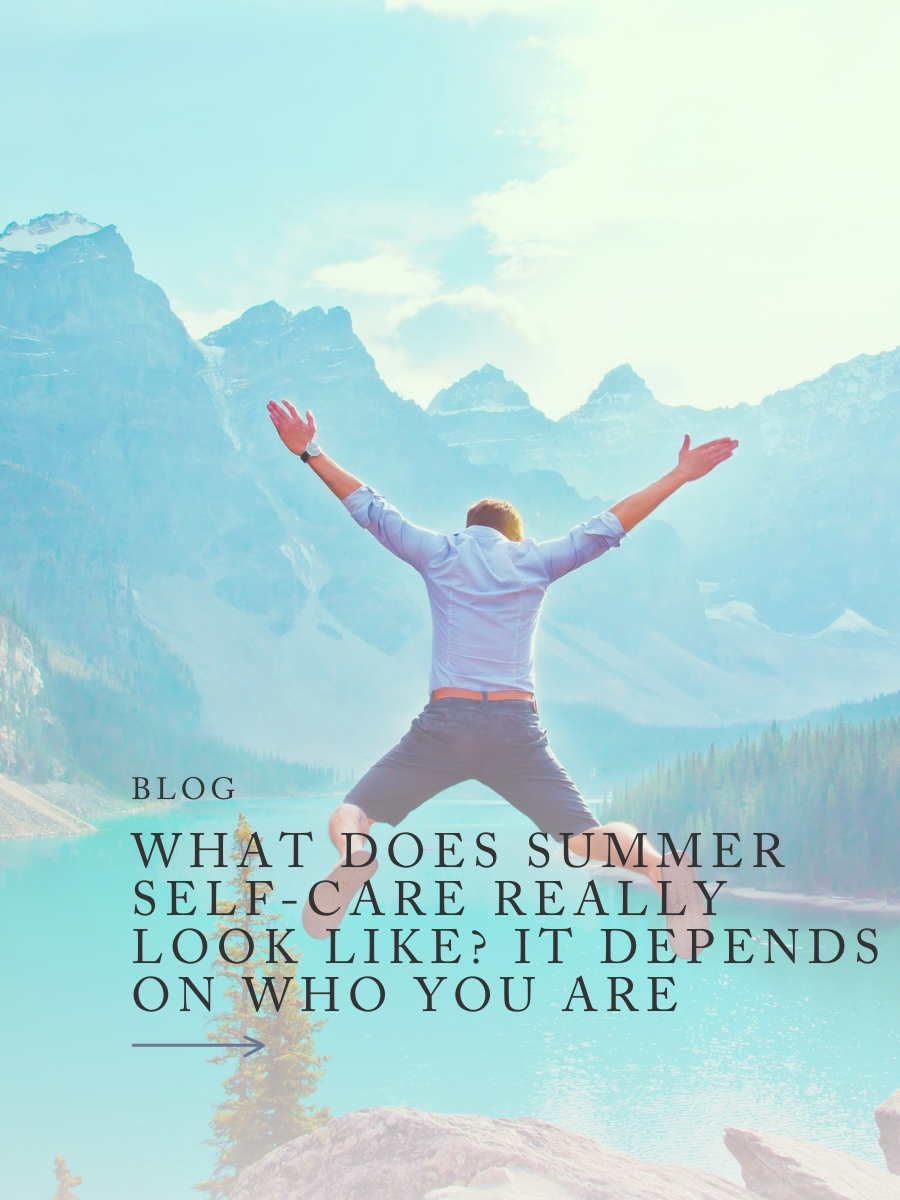
When most people think of summer self-care, they picture long, lazy days at the lake, spontaneous adventures, or socializing around a fire pit until the stars come out.
But what actually feels like self-care isn’t one-size-fits-all.
Whether summer leaves you feeling energized or overwhelmed may depend less on what you're doing, and more on who you are. Your nervous system wiring, personality traits, need for novelty and adrenaline (or not) and how you restore your energy all play a role.
🧠 The Psychology of Summer Self-Care
Self-care is most powerful when it’s personalized. Understanding your unique wiring, whether you’re more introverted or extroverted, highly sensitive and where you fall in terms of sensation-seeking, can help you create a schedule that restores you instead of depleting you.
Let’s break it down.
🌿 Introverts vs. Extroverts: How You Recharge
Introverts often recharge through solitude, quiet reflection, or one-on-one time. Too many back-to-back social events can leave you drained and irritable.
Extroverts tend to feel restored by connection, novelty, and shared experiences. Too much solo time may feel dull or even isolating.
Ambiverts are somewhere in the middle and enjoy a mix of both socializing, deeper quality connections and solo recharge time.
Self-Care Tips by Type:
☀️ Introvert? Schedule in slow mornings, solo walks, or silent reading time between events. You don’t have to say yes to everything. Aim for fewer deep and quality connections and recharge time in between social commitments.
☀️ Extrovert? Plan regular social check-ins or meetups, but be mindful not to overbook yourself into burnout. You may enjoy many connections and feel recharged with larger groups and socializing.
🌊 Sensation-Seeking: Craving Calm or Craving Stimulation?
Everyone has a different baseline for how much stimulation feels “just right.”
Low Sensation Seekers feel best in familiar, gentle, and slower-paced environments. Too much excitement can feel overwhelming.
High Sensation Seekers thrive on novelty, movement, and challenge. Too little activity can lead to boredom or restlessness.
Medium Sensation Seeks are somewhere in the middle and enjoy a mix of routine and novelty.
Self-Care Suggestions:
🌼 Low sensation seeking? Choose smaller gatherings, nature walks, or one-on-one time in quiet or familiar spaces.
🔥 High sensation seeking? Consider travel, trying a new hobby, or activities that get your heart rate up in fun ways.
💫 Highly Sensitive People (HSPs): More Input, More Recovery Time
If you’re a highly sensitive person (HSP), summer can be a lot. Bright light, heat, noise, crowds, travel, and constant togetherness may be exciting and overstimulating.
Self-Care for HSPs:
🌙 Build in decompression time after stimulation, even if you enjoyed it.
💧Protect your energy by wearing sunglasses, noise-reducing earbuds, or having “buffer time” between events.
🌿 Opt for grounding rituals like journaling, meditation, or gentle movement in nature.
💛 Create Your Own Summer Self-Care Plan
Self-care isn’t about what you “should” be doing, it’s about tuning in to what actually helps. Try asking yourself:
When do I feel most restored in summer?
What kind of stimulation feels good, and what’s too much?
What expectations am I placing on myself that might not serve me?
Do I need more connection or more solitude right now?
🌤️ A Gentle Reminder
You don’t need to make summer perfect or productive. Whether you’re traveling, working, parenting, or simply trying to slow down, your needs are valid, and they may shift week to week.
You don’t need to match someone else’s pace or version of joy. You just need to come back to yourself.
Wishing you a summer that is just right for your unique needs.