

Image: MAX
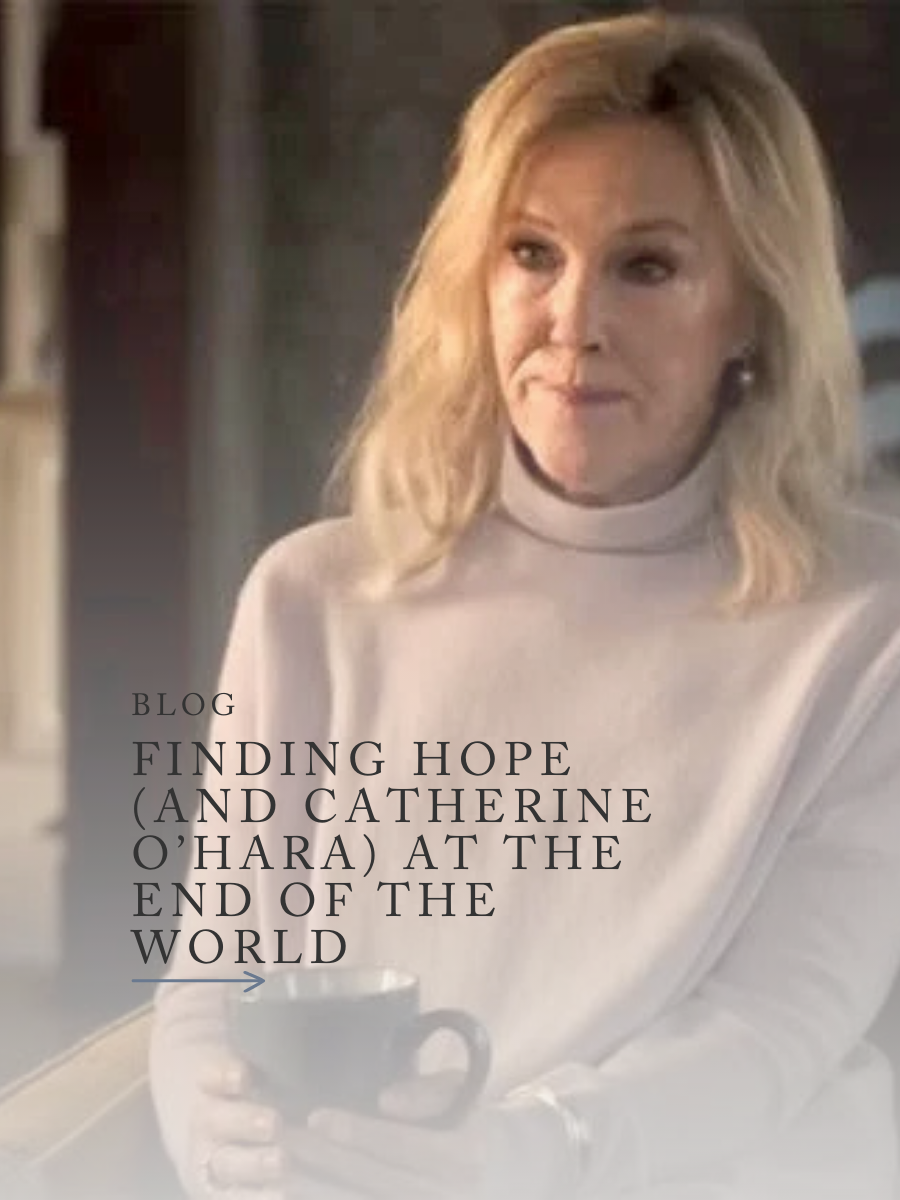
Lately, I’ve been watching season two of The Last of Us—and don’t worry, I won’t spoil any major plot points. But I have been quietly delighted to see Catherine O’Hara cast as a therapist in a post-apocalyptic world. That hit home in a way I didn’t expect.
Because honestly ? It doesn’t feel like that much of a stretch anymore.
We’ve lived through a global pandemic, ongoing climate crisis, political upheaval, and more collective grief and loss than most of us have ever had to metabolize in a single lifetime. And yet, here we are, still showing up to therapy, still talking about difficult family dynamics, emotional wounds, and the pursuit of healthy relationships… even if the world around us feels like it’s burning down (or crawling with zombies).
There’s something deeply human in that.
And it’s also why I’ve become more grateful than ever for integrating spiritual and intuitive tools into the work I do—both with clients and within myself. The complexity of what we’re navigating these days, individually and collectively, feels far too layered to be held only through traditional cognitive tools.
Don’t get me wrong: thought-based practices like identifying automatic thoughts, examining beliefs, and reframing patterns absolutely have their place. They helped me for a time in my own healing. But eventually, I reached a point where I could analyze my pain with great precision… and still feel stuck.
That’s when I knew there was more. That healing isn’t just in the mind—it’s in the body, the nervous system, and often, in the unseen realms. The patterns I was working with were not just mine. They were ancestral. Cultural. Generational. Epigenetic. Energetic.
As women especially, many of us carry deep programming: to put others first, to people-please, to stay “good” even when it costs us ourselves. These beliefs don’t just live in our thoughts. They live in our cells, in our somatic memories, and in the energetic fields passed down long before we had words.
It wasn’t until I began to explore tools rooted in nervous system regulation, somatic healing, and spiritual connection that things began to shift. That I could feel a change rather than just understand one.
Again and again, it’s this connection to something greater, call it intuition, Source, Spirit, the Divine, that anchors me (and many of my clients) in moments of chaos. That reminds us we are not alone. That we’re allowed to take the long view. To trust the process. To rest before we rise. To tend to our nervous systems before charging into action. To come back to love, to our essence, to what we can control, how we show up, how we respond, and who we choose to be in the face of the unknown.
Even in the mess, I choose to keep returning to hope. To softness. To remembering the good in humanity.
After decades of sitting with people in their most tender, raw, and painful moments, there are a few things I’ve come to believe deeply:
That the majority of humans are fundamentally good under the right conditions.
That we are all doing the best we can with what we know and the tools we have.
That even when it feels otherwise, we are evolving—individually and collectively.
That we are more alike than we are different.
That the resources we seek often live inside us.
And that we are never separate from the Divine—God, Source, the Universe—whatever name resonates for you. That this wisdom lives within us. That we can access it. That we can trust it. We can turn to it and it is there to meet us.
And maybe most importantly: we don’t need to wait for the world to be fixed before we tend to our own healing.
We can keep showing up for ourselves, for each other, and for the world, even if it feels like it’s falling apart. Maybe this is even one of the most important acts of love we can do when it feels like everything is falling apart.