

When Wellness/Spiritual Spaces Cause Harm: A Necessary Conversation
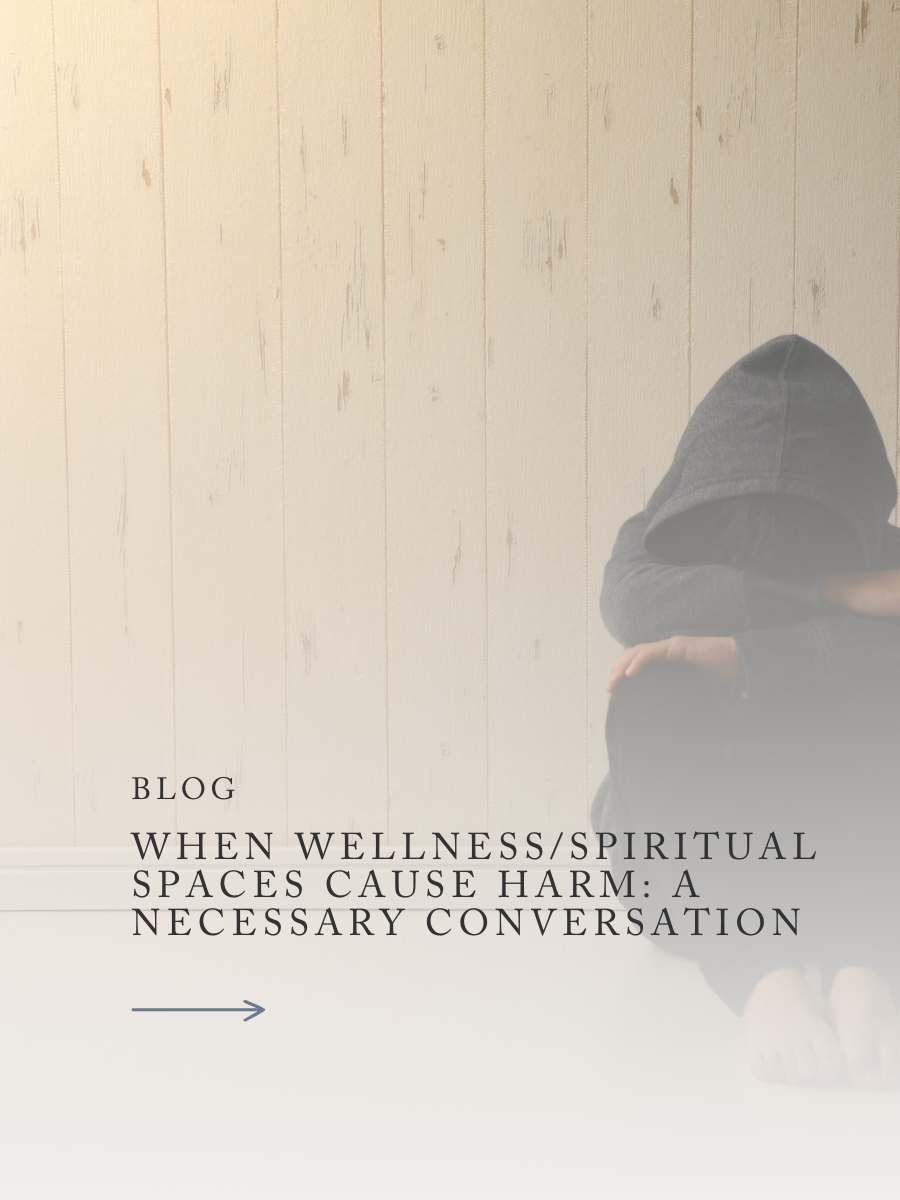
This is not my usual inspirational, spiritual, science-of-psychology-tools post.
Today I want to speak to something heavier, in light of recent conversations about spiritual teachers whose names have surfaced in connection with the Jeffrey Epstein files.
If this topic feels activating or overwhelming, please take care of yourself. You are welcome to pause here and return when, or if, you feel resourced.
(As a psychologist my focus is at the individual level, this is part of the ranking in our code of ethics so it is clear and transparent what ethical guidelines inform this focus.)
I want you to take care of yourself first and foremost.
The Shadow Side of Spiritual Spaces
In my work with spiritual individuals, most often women who have turned to trusted teachers, leaders, and healers, I’ve witnessed the shadow side that can exist even in spaces devoted to growth and awakening. I’ve experienced the dark side of this shadow myself in many different spaces.
People enter spiritual communities seeking healing, connection, meaning, and evolution. There is often an expectation of heightened integrity, of “love and light.”
That expectation can create an added layer of vulnerability.
None of us are perfect. We are all learning, evolving, and doing the best we can with the awareness and tools we have at the time. I have made mistakes. I continue to grow. No teacher, healer or guide is perfect and completely free from their “stuff”/
But there is a big difference between ordinary human imperfection and patterns of abuse, coercion, or exploitation, especially when enacted by those in positions of power and authority.
That distinction matters.
Why I Wrote F*ck Toxic Spirituality
The varying degrees of harm I’ve experienced firsthand, and witnessed in so many open-hearted clients, ignited a fire within me to write F*ck Toxic Spirituality: Avoiding Red Flags and Navigating the Spiritual Path with Integrity.
My intention was never to attack spirituality. It was to educate to empower.
It’s one thing to avoid a specific person.
It’s another to understand the patterns and red flags of manipulative or abusive dynamics so you can recognize them anywhere.
In my office, I have heard the same question countless times:
“How could I have known?” coming from a place of self-blame and a survivor being hard on themselves - adding to the sense of betrayal, not just by the other but feelings of betrayal by self.
And my answer is almost always some version of :
“You couldn’t have.
It’s not your fault.
There is no universal guidebook for navigating spiritual awakening experiences. When someone is having profound inner experiences and doesn’t know where to turn, there can be real, and often unknown, risks”.
Traditional mental health systems are not always equipped to hold spiritual emergence well unless a clinician has specific training or lived experience in that terrain. That kind of support exists (and it is growing), but it is not yet standard. Many people fear being misunderstood, judged, or mislabeled.
At the same time, well-meaning spiritual healers or coaches can miss serious mental health or physical concerns.
We are spiritual beings having a human experience, but spirituality does not erase the complexity of being human.
To Survivors
If you have been harmed:
It was not your fault.
You did not deserve what happened.
Systems of power and exploitation exist, and they often work hard to protect themselves.
Our justice systems are imperfect. In Canada, criminal convictions in these cases are rare. Civil proceedings may offer better outcomes, but they require immense time, money, and emotional energy. Legal processes can be retraumatizing. Those with resources may weaponize the system to silence or discredit survivors.
My heart and my work are with survivors. (I am also grateful there are professionals who work with perpetrators who are genuinely willing to change, because accountability and rehabilitation matter too. None of us are meant to be the right fit for everyone. Yet this is not my focus here).
Trusting Your Inner Signal
Without any victim-blaming: trust your gut.
If something feels off, even if the person is admired, respected, or well-known, talk to someone you trust. External perspective matters. Isolation increases vulnerability.
There are many well-meaning, big-hearted people doing powerful work. No one needs to be perfectly healed to be helpful.
But deeper relational and spiritual work requires certain capacities in order for it to be a safer place:
A depth of emotional maturity and capacity
Self-reflection and ability to self-regulate
Accountability
Willingness to examine impact (not just intention)
Ability to repair harm
Openness to feedback
Commitment to growth
These are learnable skills.
There is also a small percentage of the population with high levels of certain personality disorder traits that can make sustained accountability and meaningful change very difficult.
This is not meant to scare you.
It is meant to inform you.
Access to information, and resources, are sources of personal empowerment.
When Someone Discloses Abuse
There is an uncomfortable but important truth: the majority of abuse claims are true. False reports are rare. (Studies find this is in the 90-98% range).
If someone shares their experience with you, you do not need to investigate or determine every fact. Your first role is empathy. and support. To not add to the trauma.
Validate their experience.
Support their emotions.
Help connect them with appropriate resources.
It takes enormous courage to disclose harm.
Far too often survivors are met with immediate denial: “That didn’t happen. They could not have done this” These reactions usually come from overwhelm, fear, or lack of capacity and understanding of the dynamics of abuse and manipulation, but they can cause profound additional harm.
Sacred Rage and Social Change
Spirituality is not bypassing. It is not dissociation dressed up as enlightenment.
All emotions can be part of our path, including anger.
There is such a thing as righteous anger. Sacred rage.
Throughout history, meaningful social change has been driven by those willing to harness that energy and turn it into action.
We can:
Demand accountability from leaders
Set boundaries in our families
Refuse to minimize harmful behaviour
Protect children
Support survivors
Channel our anger into justice
This is not the opposite of love.
It is fierce love.
It is the embodiment of love warrior energy.
A Note on Capacity
Sometimes we need rest.
Sometimes we need limits on the information we consume.
Sometimes we must tend to our own trauma first.
And sometimes, when resourced, we need to ask whether turning away is protection… or spiritual bypassing.
Only you can know which is true for you in a given moment.
Resources (Canada & International)
If you or someone you know needs support:
Calgary Communities Against Sexual Abuse – https://calgarycasa.com/
Little Warriors – https://littlewarriors.ca/
Association of Alberta Sexual Assault Services – https://aasas.ca/get-support/
Calgary Police Service Victim Resources – https://www.calgarypolice.ca/public-safety/victims-resources/sexual-assault-and-violence.html
Alberta Health Services Sexual Assault Response – https://www.albertahealthservices.ca/findhealth/service.aspx?id=1962
Ending Violence Canada – https://endingviolencecanada.org/sexual-assault-centres-crisis-lines-and-support-services/
Baker Law Firm (Civil sexual assault claims; only represents survivors; free consultations) – https://bakerlawfirm.ca/
Public Safety Canada Discussion Guide for Parents – https://www.canada.ca/en/public-safety-canada/campaigns/online-child-sexual-exploitation/a-discussion-guide-for-parents-and-caregivers.html
If you are in immediate danger, contact local emergency services.
If this post resonated, you are not alone.
And if it felt like too much, that is okay too.
Take care of your nervous system.
Healing and justice both require capacity.