

Breaking cycles, whether they are patterns of behaviour, trauma, or unhealthy family dynamics, is a profound and courageous journey. For many, the decision to become a cycle breaker first begins when we question how things have been done before us. From the norms, expectations or patterns that have been passed down (consciously or unconsciously). This may be in our own family of origin, early relationship history and even wider culture and society. In order to make the conscious choice to keep what resonates but to change what has caused harm we need to recognize that change is necessary—not just for ourselves, but for future generations. This does not mean that we blame or shame our parents or ancestors. Far from it. We recognize that we are all imperfect human beings, we are all heavily influenced by the social times and norms we grow up in and are surrounded by. We can hold both truths. Very often those who came before us did the best they could with the awareness and tools they had at the time. And that we want to do better. This is an act of profound self-awareness and responsibility, and therapy can be a transformative tool in this process.
Understanding the Role of the Cycle Breaker
Cycle breakers are often those of us who have become acutely aware of the repeating patterns within our family or personal history. These patterns could involve trauma, abuse, addiction, or other forms of dysfunction. We often think of trauma survivors when we think of cycle breakers yet this is not the only type of cycle breaker. can range in intensity and the resulting level of harm. From downright abuse or neglect at the more harmful ends of the spectrum to emotional immunity, lack of self-awareness, lack of presence or connection, and conventional gender roles or expectations that disadvantage one group to the benefit of another. The other end of the spectrum can be where we didn’t think there was anything wrong at first (or for a long time) until we began to dig deeper and question the validity of what was “normal.”
The cycle breaker archetype is the one who decides that these patterns end with them—that they will not be passed on to their children or continue to affect their lives. We are often the first ones in our family or existing systems to take on the difficult work of increasing our emotional capacity. Including self-awareness, emotional maturity, self-regulation, empathy, and the capacity for unconditional love. We do this work for the benefits it brings to our own lives and for the changes that increasing this depth within us ripples out into our larger web of connection.
The work of a cycle breaker can be deeply emotional and often challenging. It involves not just addressing personal trauma but also navigating the complexities of family dynamics and societal expectations. Having support in this process can make a world of difference. Many of us feel called to this work, yet we may feel isolated and alone as we are often the first or even only ones in our original families who are doing this work. Therapy is one avenue that can provide a safe and supportive space to explore these issues, gain clarity, and develop strategies for creating lasting change. Finding other cycle breakers to connect with is also so important.
The Therapeutic Process for Cycle Breakers
In therapy, the journey begins with awareness—acknowledging the patterns that have been perpetuated and understanding their origins. This often involves exploring one’s family history and inner child (subconscious or unconscious beliefs and experiences) and the ways in which certain behaviours or beliefs have been passed down through generations. This work is deeply holistic.
For those who are highly sensitive or empathic, the therapeutic process may also involve learning how to protect oneself from the emotional burden of others while still remaining compassionate and connected. This is crucial for cycle breakers, as they often feel deeply connected to their family and may struggle with guilt or responsibility due to their intuitive ability and the lack of teaching, mentorship or support for these gifts in Western culture.
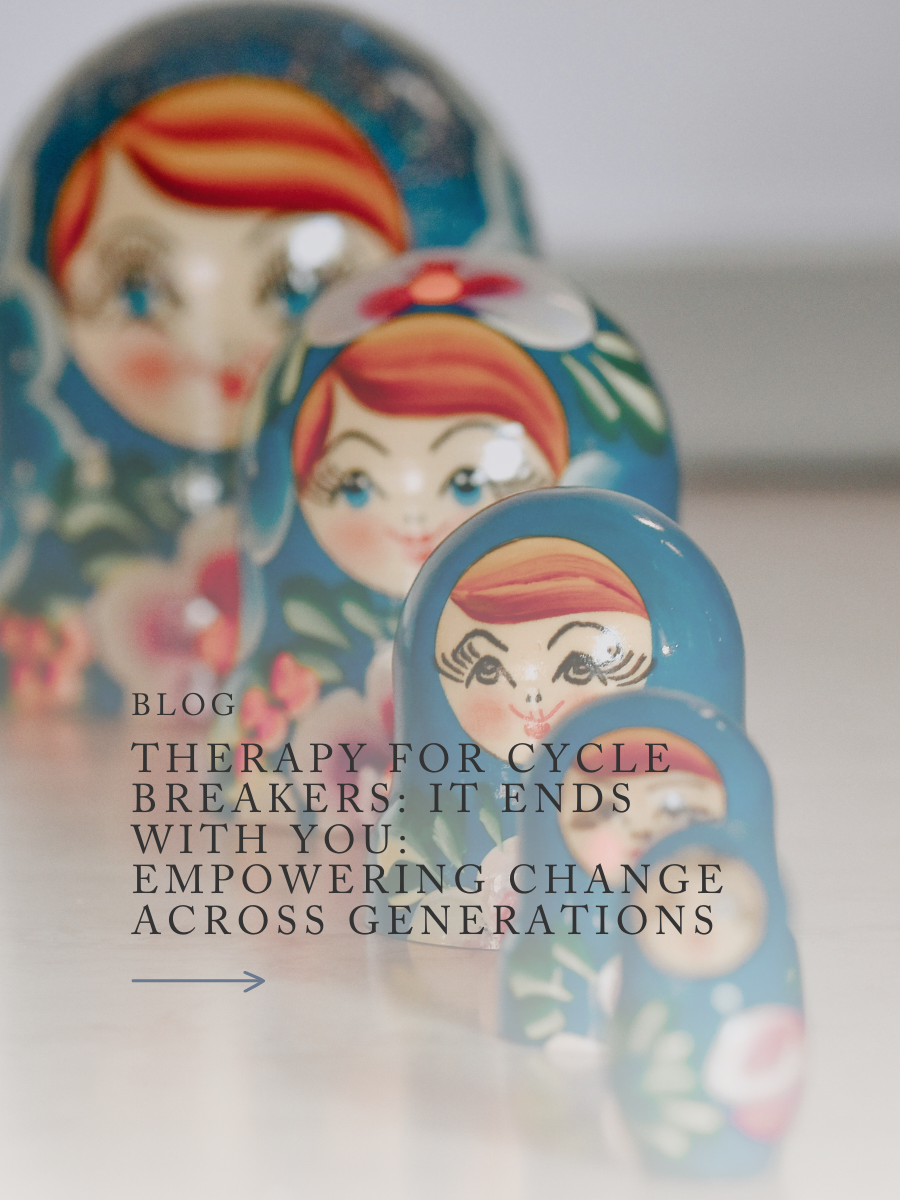
Like a set of nesting dolls, our individual experiences cannot be fully separated from those who came before us. It is wired within our DNA. Yet the good news is that there are tools that can help us to process and release this old pain and patterns so we can more fully embody our authentic selves and truth in this work. This work is not always an easy process, yet the rewards get to the core of our human and spiritual needs for self-actualization and personal fulfillment.
Avoidance helps us to avoid the pain in the short term. Yet, facing what is difficult, even when painful in the moment, can stop the bleeding and allow the wound to heal. This work is more of an investment in your longer-term peace, contentment, sense of safety, richer relationships strong sense of self and earned pride and connection to your unique soul purpose in this lifetime.
Empowerment and Transformation
The ultimate goal of therapy for cycle breakers is empowerment—helping individuals to not only break free from old patterns but also to build a life that is aligned with their values and aspirations. This may involve setting boundaries, redefining relationships, and learning how to care for oneself in a way that was not modelled in one’s family of origin.
Ultimately it is a return to a greater sense and knowing of our authentic wholeness. It is a coming home to who you really are, underneath the levels of experiences, traumas and past conditioning. For those on this journey, it’s important to remember that change is a process, not an event. It requires patience, persistence, and self-compassion. But with the right support, it is possible to break free from the past and create a new legacy—one of healing, resilience, and hope.
Final Thoughts
As a cycle breaker, you are taking a courageous step towards healing not just yourself, but potentially generations to come. Therapy is not a quick fix, but it is a powerful tool in this transformative journey. By engaging in this work, you are creating the possibility for a new, healthier path forward.
If you feel ready to embark on this journey, or if you need support in continuing the work you’ve already started, therapy can provide the guidance and tools you need to succeed. Remember, you don’t have to do this alone—support is available, and healing is possible.
For more information on how therapy can support you in breaking cycles, you can explore my services here: (Katie Turner Psychology).