

Burnout: When Pushing Through Stops Working
Most of us know what it feels like to be stressed.
We go through busy seasons. We juggle work, family responsibilities, caregiving, relationships, health concerns, and the endless demands of everyday life. During stressful periods, it's normal to feel tired, overwhelmed, or stretched thin.
But burnout is different.
Burnout is more than having a difficult week or feeling exhausted after a busy month. It is a state of emotional, mental, and often physical exhaustion that develops when stress continues for too long without enough opportunity for recovery.
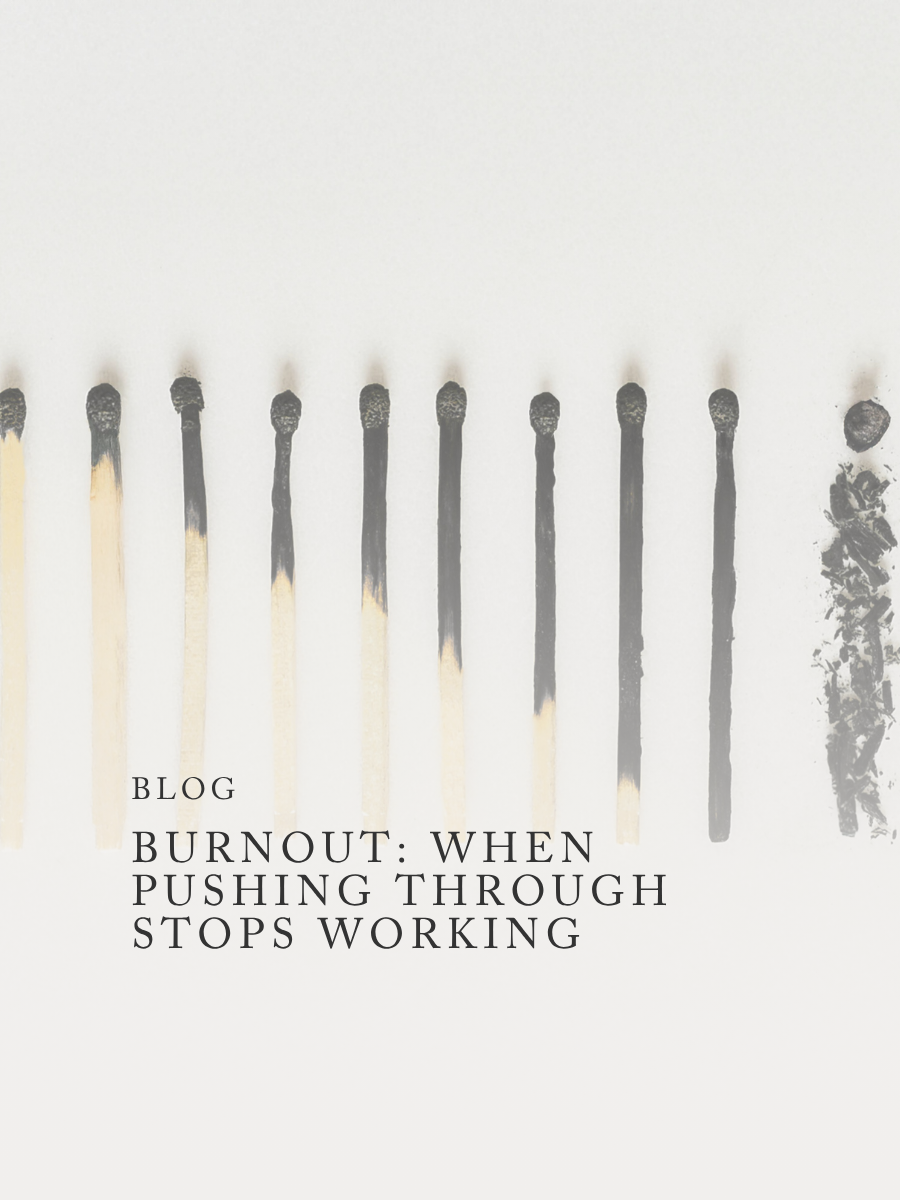
One of the challenges with burnout is that it often sneaks up on us. It rarely arrives all at once. Instead, it develops gradually over time, making it difficult to recognize until we're already struggling.
Many of the people I work with are surprised when we begin talking about burnout. They often come to therapy wondering whether they are depressed, anxious, unmotivated, or simply failing to keep up with life. What they don't always realize is that their mind and body may have been operating in survival mode for months—or even years.
Burnout Doesn't Mean You're Weak
One of the biggest misconceptions about burnout is that it happens because someone isn't resilient enough.
In reality, the opposite is often true.
The people most vulnerable to burnout are frequently highly capable, conscientious, and caring individuals. They are the people others depend on. They are the ones who show up, take responsibility, and keep going even when they are running on empty.
Many have become experts at pushing through discomfort.
They tell themselves:
"I just need to get through this week."
"Things will calm down after this project."
"I can rest later."
Sometimes that strategy works in the short term. Life inevitably includes periods when we need to dig deep and keep moving forward.
The problem occurs when those periods become our normal way of functioning.
Imagine driving a car while consistently using more fuel than you're putting back into the tank. Eventually, the tank runs dry. It doesn't matter how reliable the vehicle is or how skilled the driver may be.
The same principle applies to human beings.
We all have limits. When stress continually exceeds our ability to recover, burnout becomes increasingly likely.
Why Burnout Is Often Missed
Part of the reason burnout can be difficult to identify is that many of its symptoms overlap with anxiety and depression.
Someone experiencing burnout may notice:
Persistent fatigue
Difficulty concentrating
Increased irritability
Sleep disturbances
Feeling emotionally drained
Loss of motivation
Withdrawal from others
Reduced enjoyment in activities they once valued
Because these symptoms are also common in depression and anxiety, people often assume those are the only explanations.
The reality is that burnout, anxiety, and depression can exist separately, but they can also overlap. In some cases, prolonged burnout may contribute to the development of anxiety or depression.
This is one reason why understanding the role of burnout is so important. If burnout is part of the picture, addressing the chronic stress and lack of recovery becomes an essential part of healing.
The Slow Slide Into Burnout
I often think of burnout as a slippery slope.
At first, the signs are subtle. Maybe you're feeling a little more tired than usual. You're not sleeping quite as well. Small tasks require more effort. You find yourself becoming impatient more easily.
Because these changes happen gradually, it's easy to dismiss them.
You may continue functioning relatively well for a long time.
Then, over weeks or months, the symptoms begin to build.
You start waking up exhausted despite spending enough time in bed. Concentrating becomes harder. Your patience becomes thinner. Activities that once brought enjoyment start to feel like obligations.
Many people describe feeling as though they are simply going through the motions of their lives.
They're still showing up to work. They're still taking care of their families. From the outside, things may appear fine.
Inside, however, they feel disconnected, depleted, and increasingly overwhelmed.
Common Signs of Burnout
Burnout tends to affect us physically, emotionally, and cognitively.
Physical Signs
Chronic fatigue
Frequent headaches
Muscle tension
Sleep difficulties
Increased illness or slower recovery from illness
Changes in appetite
Emotional Signs
Irritability
Anxiety
Feeling overwhelmed
Emotional numbness
Hopelessness
Increased sensitivity to stress
Cognitive Signs
Difficulty concentrating
Forgetfulness
Reduced productivity
Trouble making decisions
Feeling mentally "foggy"
Over time, these symptoms can begin affecting every area of life, not just the original source of stress.
What may begin as workplace burnout can eventually affect relationships, parenting, friendships, and overall quality of life.
Recovery Requires More Than Just a Vacation
One of the most common questions people ask is, "How do I recover from burnout?"
Unfortunately, burnout recovery is rarely as simple as taking a weekend off.
Because burnout develops over time, recovery often takes time as well.
Healing typically involves a combination of:
Reducing chronic stressors where possible
Creating healthier boundaries
Prioritizing rest and recovery
Reconnecting with meaningful activities
Building support systems
Learning to recognize limits before reaching exhaustion
Processing the stress response on a regular basis (and not just dealing with the individual stressors)
It may also involve deeper work to shift feelings of guilt for resting or belief systems and self-talk that tell us we “should” be doing more
For some people, therapy can be an important part of this process. Therapy can help identify the factors contributing to burnout, challenge patterns that keep it going, and develop practical strategies for creating a more sustainable life.
A Final Thought
If you've been feeling exhausted, disconnected, irritable, or like you're constantly running on empty, it's worth paying attention.
Burnout is not a personal failure. It is often a signal that your current demands have exceeded your available resources for too long.
Our minds and bodies are remarkably resilient, but they are not designed to function indefinitely without rest, support, and recovery. We can push through for a certain time period, but eventually our bodies or mental health will start to show the strain or will even start to shut us down in different ways.
Recognizing burnout early can make a significant difference. The sooner we acknowledge the warning signs, the sooner we can begin making the changes necessary to restore balance, energy, and well-being.